April Inside the Hive
Here is David Hocutt’s latest exploration and report of what is going on inside his hives. - Very Informative.
Inside the Hive April 2018
by David Hocutt
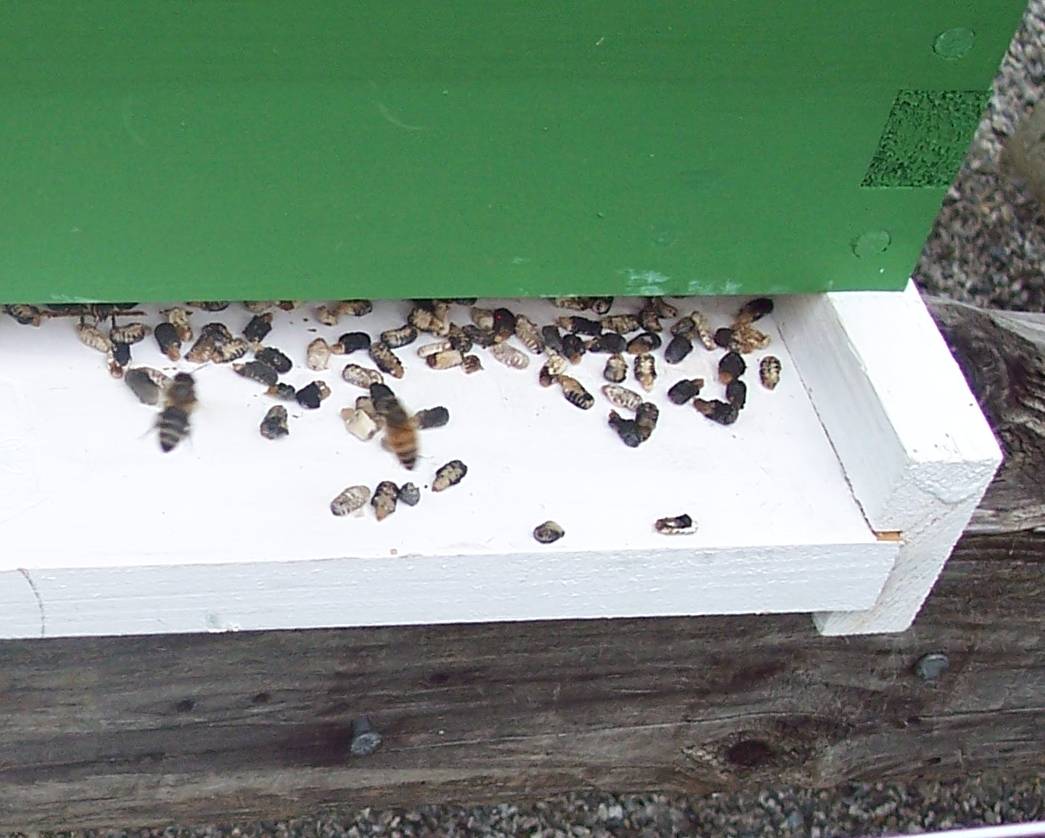
The past few weeks, as I walked in my apiary, I noticed on the ground near the hives many discolored and discarded larvae and pupae. Some of the returning birds, robins and swallows were having a feast, but I was afraid the news would be bad from inside the hive. Unfortunately, it stayed too cold for me to check until very recently.
I finally had a chance to go inside fifteen hives during the past few warm days. During February, the bees expanded their brood nest and utilized much of their stores in doing so. In many hives the colder than average temperatures we experienced during the last part of March and the first part of April caused the bees to contract the cluster to the point they were unable to cover the entire brood area and much of the exposed brood became chilled and therefore expired. On warmer days, the bees clean this dead brood from the cells and carry it outside the hive. This happened in a little more than half of the hives I checked so I suspect many beekeepers will be experiencing this situation.
The bees understand what time of the year it is by the length of the daylight hours and will be working their hardest to recover and be ready for the upcoming nectar flows. Unfortunately, it looks like we may experience yet another colder than average spell and this may affect the bees once again.
Now the bees are using their remaining stores to try and expand their brood nest once again. This time of the year and in this situation, it becomes critical that the bees remain in constant contact with a food source and do not run out of sustenance, not even for a day. It is imperative that there is enough food to feed all of the bees, including larvae, all of the time. It may even be prudent to provide the bees with a protein source,if they have no pollen visible within the hives. I had to place pollen substitute patties in a few hives. The bees are doing their best to recover, you need to do your best to help them.
The good news is this colder weather has suppressed many flowering plants from blooming too early. As soon as it warms up a bit more, these plants will explode with blooms and the bees will have way more than enough forage. Be ready for it.
There is perseverance inside the hive. :-)
David Hocutt
Photo credit: <a href="http://skagitvalleybeekeepers.org/101/me-deadlarvae.jpg">Skagitvalleybeekeepers.org</a>
, you are subscribed with the following address: example@PROTECTED
If you no longer wish to receive these emails please click the following link:



- This mailing list is a public mailing list - anyone may join or leave, at any time.
-
This mailing list is announce-only.
This is the All Members email list for the Central Indiana Beekeepers Association.
Privacy Policy:
.